Don’t Break the Ice Game Instructions: A Comprehensive Guide
Don’t Break the Ice is a thrilling game of skill and suspense, enjoyed by families and friends alike, offering entertainment through strategic hammering and careful planning.
What is Don’t Break the Ice?
Don’t Break the Ice is a classic children’s game centered around a playful premise: carefully tap out ice blocks from a frozen landscape without causing the polar bear to fall through! It’s a game of steady hands, strategic thinking, and a little bit of luck, designed for two or more players.
The core concept revolves around players taking turns gently hammering ice blocks, attempting to remove pieces while keeping the polar bear balanced on the remaining structure. The suspense builds with each tap, as one wrong move could send the bear plummeting, eliminating a player from the round. It’s a fantastic way to develop fine motor skills and encourage strategic decision-making in a fun, engaging environment.
Essentially, Don’t Break the Ice is a test of precision and nerve, offering a delightful blend of excitement and anticipation for players of all ages. It’s a simple yet captivating game that consistently delivers laughter and memorable moments.
Game Components & Overview
A standard Don’t Break the Ice game typically includes a plastic ice rink frame, a central polar bear figure, and a collection of translucent blue ice blocks designed to fit snugly within the frame. The number of ice blocks can vary slightly between different editions, but generally, there are enough to completely fill the rink.
The ice rink itself is usually constructed from durable plastic, providing a stable base for the game. The polar bear is often made of a slightly heavier plastic to give it a realistic presence and ensure it’s clearly visible. The ice blocks are intentionally designed to be somewhat fragile, mimicking the delicate nature of real ice.
The objective of the game is straightforward: players take turns removing ice blocks until someone inevitably causes the polar bear to fall through, thus being eliminated. The last player remaining with a stable ice structure is declared the winner. It’s a simple setup with a surprisingly engaging gameplay loop.
Setting Up the Game
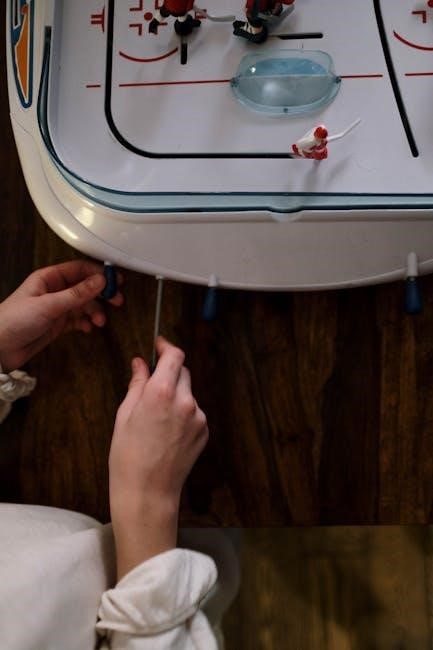
Preparing for play involves assembling the ice rink, carefully inserting all the ice blocks to create a solid surface, and positioning the polar bear centrally.
Assembling the Ice Rink
Begin by unpacking all the game components and identifying the frame pieces that form the perimeter of the ice rink. These pieces typically snap together easily, creating a circular or square boundary. Ensure each connection is secure to provide a stable base for the game.
Next, carefully connect the side pieces, following any included diagrams or instructions. The frame should stand upright on its own, providing a defined playing area; Double-check that all corners are firmly joined, preventing any wobbling during gameplay. A sturdy frame is crucial for maintaining the integrity of the ice rink throughout the game.
Once the frame is assembled, you’re ready to proceed to the next step: inserting the ice blocks; A well-constructed frame ensures a fun and engaging experience for all players, setting the stage for a thrilling challenge of skill and strategy.
Inserting the Ice Blocks
Carefully take each ice block and gently press it into place within the assembled frame. The blocks are designed to fit snugly, creating a solid ice surface. Start from the outer edges and work your way towards the center, ensuring each block is level with its neighbors.
Avoid forcing the blocks, as this could cause them to crack or break. If a block doesn’t fit easily, slightly adjust its position or check for any obstructions. The goal is to create a uniform surface without gaps or unevenness. A stable ice surface is essential for a fair and enjoyable game.
Continue until all the ice blocks are securely in place, forming a complete ice rink. Once finished, lightly press down on each block to confirm its stability. Now the rink is ready for players to test their skills and attempt to navigate without breaking the ice!
Player Roles & Starting Position
Each participant takes on the role of a brave explorer venturing onto the fragile ice. There are no distinct roles beyond this – everyone aims to be the last explorer remaining on the ice! The number of players can vary, typically ranging from two to six, depending on the size of the game set.
To begin, players decide on a starting order, often determined by a simple method like rolling a die or drawing straws. The first player positions their penguin (or designated game piece) on any ice block along the outer edge of the rink.
Subsequent players then place their penguins on different outer edge blocks, ensuring each player has a unique starting location. Avoid clustering penguins together at the start, as this increases the risk of early eliminations. Once all players are positioned, the game is ready to commence!
Gameplay Mechanics
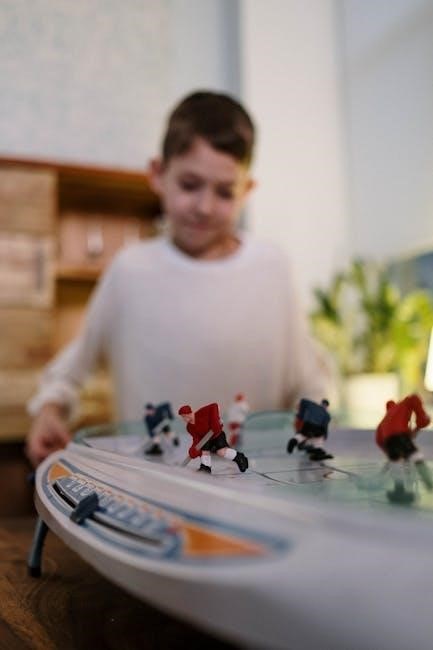
The core gameplay revolves around taking turns hammering out ice blocks, strategically attempting to avoid causing other players’ penguins to fall through the icy surface.
Taking Turns – How to Play
Players alternate turns, beginning with the youngest participant and proceeding clockwise around the assembled ice rink game board. Each player’s turn consists of a single, deliberate action: using the provided plastic hammer to gently tap out one of the remaining ice blocks.
It’s crucial to apply controlled force; too little and the block won’t dislodge, too much and you risk collapsing a larger section of the ice! Before each hammer strike, players must carefully assess the structure, identifying blocks that appear structurally weak or pivotal to the stability of others.
The goal isn’t simply to remove blocks, but to strategically force opponents’ penguins to tumble into the icy abyss. Players should consider the potential chain reaction of each tap, visualizing how removing a specific block might impact the surrounding ice formations. A thoughtful approach is key to success!
Hammering the Ice Blocks
The plastic hammer is your primary tool, demanding a delicate touch and strategic precision. Hold the hammer comfortably, avoiding excessive force – remember, finesse is more valuable than brute strength in Don’t Break the Ice! Aim for the center of the chosen ice block, applying a controlled tap.
Observe the block’s reaction. If it doesn’t budge, a slightly firmer tap might be necessary, but proceed cautiously. Avoid swinging wildly or striking the surrounding blocks, as this increases the risk of an unintended collapse. Focus on isolating the target block and gently persuading it to fall.
Consider the angle of your strike; a direct hit is usually most effective. Practice makes perfect – experiment with different levels of force to develop a feel for the hammer and the ice blocks’ fragility. A steady hand and careful aim are essential for successful gameplay.
Determining a Safe Block
Strategic thinking is paramount when selecting your target. A “safe” block isn’t necessarily one that won’t fall, but rather one whose removal poses the least risk to yourself and the greatest risk to opponents. Scan the ice rink carefully, assessing how each block is supported by its neighbors.
Look for blocks with minimal support – those held in place by only one or two other blocks are prime candidates. Conversely, avoid blocks that appear crucial to the overall structure’s stability. Consider the potential chain reaction; removing one block might trigger a cascade, eliminating multiple players.
Anticipate your opponents’ moves. If they’re relying on a particular block for support, targeting it could be a clever tactic. Remember, the goal isn’t just to survive, but to be the last player remaining. Careful observation and calculated risk-taking are key to success.
Rules & Regulations
Gameplay adherence is crucial for fair play; avoid the polar bear, respect elimination rules, and understand block re-setting procedures to ensure a fun experience.
Avoiding the Polar Bear
The polar bear piece adds a unique element of risk to Don’t Break the Ice. Before the game begins, the polar bear is carefully positioned on the top layer of ice blocks. Players must strategically tap out ice blocks, being acutely aware of the polar bear’s location.
The primary goal is to avoid causing the ice structure to collapse with the polar bear still resting upon it. If a player’s hammer strike results in the polar bear falling through the ice, that player is immediately eliminated from the game. This adds a layer of tension and requires players to consider not only the stability of the ice but also the potential consequences for the adorable, yet perilous, polar bear.
Careful observation and a steady hand are essential to successfully navigate this icy challenge and keep the polar bear safely above the freezing waters!
Falling Through the Ice – Elimination
A core mechanic of Don’t Break the Ice revolves around the dramatic consequence of a player causing an ice block – and potentially themselves – to fall through the icy structure. When a player removes a block and the polar bear (or any other pieces) tumble down, immediate elimination occurs for that player.
This isn’t limited to just the polar bear; if a player causes any of the ice pieces to fall through due to their hammer strike, they are out of the game. The fallen pieces remain removed, weakening the overall structure and increasing the difficulty for remaining players.
Elimination is definitive – once a player is out, they no longer take turns. The game continues until only one player remains, proving their skill and steady hand in this thrilling test of icy precision!
Re-setting Fallen Blocks (If Applicable)
Standard gameplay of Don’t Break the Ice typically does not include a rule for re-setting fallen ice blocks. Once a block is dislodged and falls through, it remains out of play for the duration of the game. This permanent removal is central to the escalating tension and increasing difficulty as the game progresses.
However, house rules often introduce variations. Some families opt to re-insert fallen blocks, potentially after a penalty (like skipping a turn) or only during specific phases of the game. This can extend playtime and offer a more forgiving experience, especially for younger players.
If implementing a re-setting rule, clearly define the conditions beforehand to avoid disputes. Consistency is key! Remember, the core challenge lies in the diminishing ice field, so altering this significantly changes the game’s dynamic.

Winning the Game
The ultimate goal is to be the last player who hasn’t caused the polar bear to fall! Skillful hammering and strategic thinking secure victory.

The Last Player Standing
The game culminates when only one player remains with their polar bear still perched atop the intact ice rink. This individual is declared the winner, demonstrating both skillful hammering technique and a degree of luck in avoiding the collapsing ice structure. It requires careful observation of the ice block formations and anticipating how each tap of the hammer will affect the overall stability.
Successfully navigating the game demands a blend of precision and calculated risk-taking. Players must strategically choose which ice blocks to target, aiming to destabilize their opponents’ positions while simultaneously safeguarding their own. The tension builds with each turn as the ice rink becomes increasingly fragile, and the threat of a sudden collapse looms large. Ultimately, the last player standing proves their mastery of the game, earning bragging rights and the sweet taste of victory!
Strategies for Success
To excel at Don’t Break the Ice, observe your opponents’ choices and anticipate the consequences of each hammer strike; Targeting blocks supporting multiple opponents’ polar bears can maximize impact, increasing their risk of falling through. However, be cautious – this can also weaken the rink overall, potentially leading to your own elimination.
A key tactic involves identifying blocks that appear structurally weak or already compromised. Gentle taps on these areas can trigger a cascade effect, causing a larger section of the ice to crumble. Conversely, avoid hitting blocks directly beneath your own polar bear, or those that seem crucial for maintaining the rink’s integrity. Remember, patience and calculated risks are vital; a hasty strike can quickly lead to your downfall. Focus on subtly destabilizing the rink, rather than attempting dramatic, risky moves.
Variations & House Rules
Enhance gameplay with team challenges, adjustable difficulty by altering hammering force, or creative rules like “safe zone” blocks for added strategic depth.
Team Play Options
Team play transforms Don’t Break the Ice into a collaborative and competitive experience. Divide players into two or more teams, alternating turns hammering the ice blocks. A team is eliminated when one of its members causes the polar bear to fall through the ice.
Consider a rule where teams can strategically discuss which block to target before each turn, fostering communication and shared responsibility. Another variation involves assigning roles within each team – a “hammerer” and a “strategist” – to diversify gameplay.
For larger groups, implement a scoring system where teams earn points for successfully keeping the polar bear afloat and deduct points for causing eliminations. This adds a layer of complexity and encourages careful consideration of each hammer swing. Remember to clearly define team boundaries and turn order before starting a team-based game.
Adjusting Difficulty Levels
Difficulty adjustment in Don’t Break the Ice caters to players of varying ages and skill levels. For younger or less experienced players, begin with fewer ice blocks initially inserted into the frame, making it easier to avoid the polar bear’s fall. Alternatively, allow slightly gentler taps with the hammer.
To increase the challenge for seasoned players, insert all ice blocks and enforce stricter hammering rules – requiring more forceful, precise strikes. A “blindfolded hammer” variation, where players hammer without looking, dramatically increases difficulty and hilarity.
Another method involves limiting the discussion time before each turn, forcing quicker decisions. Consider adding obstacles around the ice rink to restrict hammering angles. Remember, the goal is to create a fun and engaging experience for everyone involved, so tailor the difficulty to the group’s preferences.
Creative Rule Modifications
Spice up your Don’t Break the Ice game with inventive rule modifications! Introduce a “challenge card” system, where players draw cards dictating specific hammering techniques – like using only one hand or aiming for a particular block. Implement a “block swap” rule, allowing a player to exchange one block’s position before their turn.
For added excitement, assign point values to each ice block; breaking higher-value blocks results in penalties. Create a “rescue mission” where a player can attempt to carefully re-insert a fallen block (with risks!).
Consider a “themed round” where players must act like characters while playing. Don’t be afraid to invent penalties for rule-breaking, like performing a silly dance. The key is to foster creativity and laughter, transforming a classic game into a uniquely memorable experience for all participants.

Troubleshooting & Common Issues
Addressing common problems like broken pieces or hammering difficulties ensures a smooth gameplay experience, keeping the fun flowing for everyone involved in the game.
Broken Ice Blocks – Replacement
Inevitably, during the enthusiastic hammering action of Don’t Break the Ice, some ice blocks may crack or shatter. Don’t worry, this is a fairly common occurrence! Fortunately, resolving this issue is usually straightforward. Most game sets don’t include spare blocks, but resourceful players can easily create replacements.
Consider using thin, clear plastic – like from packaging – cut to the correct size and shape. Alternatively, sturdy cardstock, covered with clear tape for durability, can also work well. Ensure the replacement blocks fit snugly into the frame, maintaining the game’s structural integrity. Prioritize safety; avoid using materials with sharp edges.
For a more permanent solution, contacting the game manufacturer might yield replacement parts, though this isn’t always guaranteed. Remember to supervise younger players during block replacement to prevent accidental injuries. A little ingenuity keeps the icy fun going!
Difficulty Hammering – Tips
Some players, particularly younger ones, might find it challenging to hammer the ice blocks effectively in Don’t Break the Ice. The key is controlled taps, not forceful swings! Encourage a gentle, deliberate approach, focusing on precision rather than power. Holding the hammer closer to the head provides greater control.
Practice makes perfect; allow players to practice tapping on a safe surface before starting the game. Remind them to aim for the center of the block, avoiding the edges. A lighter hammer, if available, can also be beneficial for those with less upper body strength.
Consider placing the ice rink on a stable, non-slip surface to prevent movement during hammering. Emphasize that the goal isn’t to break the ice, but to carefully remove blocks. Patience and a steady hand are crucial for success!
Game Setup Problems
Occasionally, players may encounter issues during the setup of Don’t Break the Ice. A common problem is difficulty assembling the ice rink frame; ensure all pieces are correctly aligned and firmly snapped into place. If pieces feel loose, double-check the connection points and apply gentle pressure.
Another potential issue is uneven ice block insertion. Blocks should fit snugly but not be forced. If a block doesn’t fit easily, rotate it slightly and try again. Avoid excessive force, as this could damage the plastic. Ensure the polar bear is securely positioned in the center hole before starting.
Finally, verify that the playing surface is level. An uneven surface can cause instability and affect gameplay. If problems persist, consult the game’s instructions for diagrams and troubleshooting tips. A properly set up game is essential for a fun experience!